A new target group is entering the market: AI assistants that compare products, request services and initiate purchases on behalf of their users. Gartner predicts that by 2028, at least 70% of all customers will be using an AI-powered dialogue channel to initiate their customer service process (source: gartner.com). Companies and organizations that do not offer AI assistants access to their services will lose visibility in purchasing decisions.
25.08.2026
From CRM to agent relationship management
When AI assistants act on behalf of customers, CRM needs a new dimension.

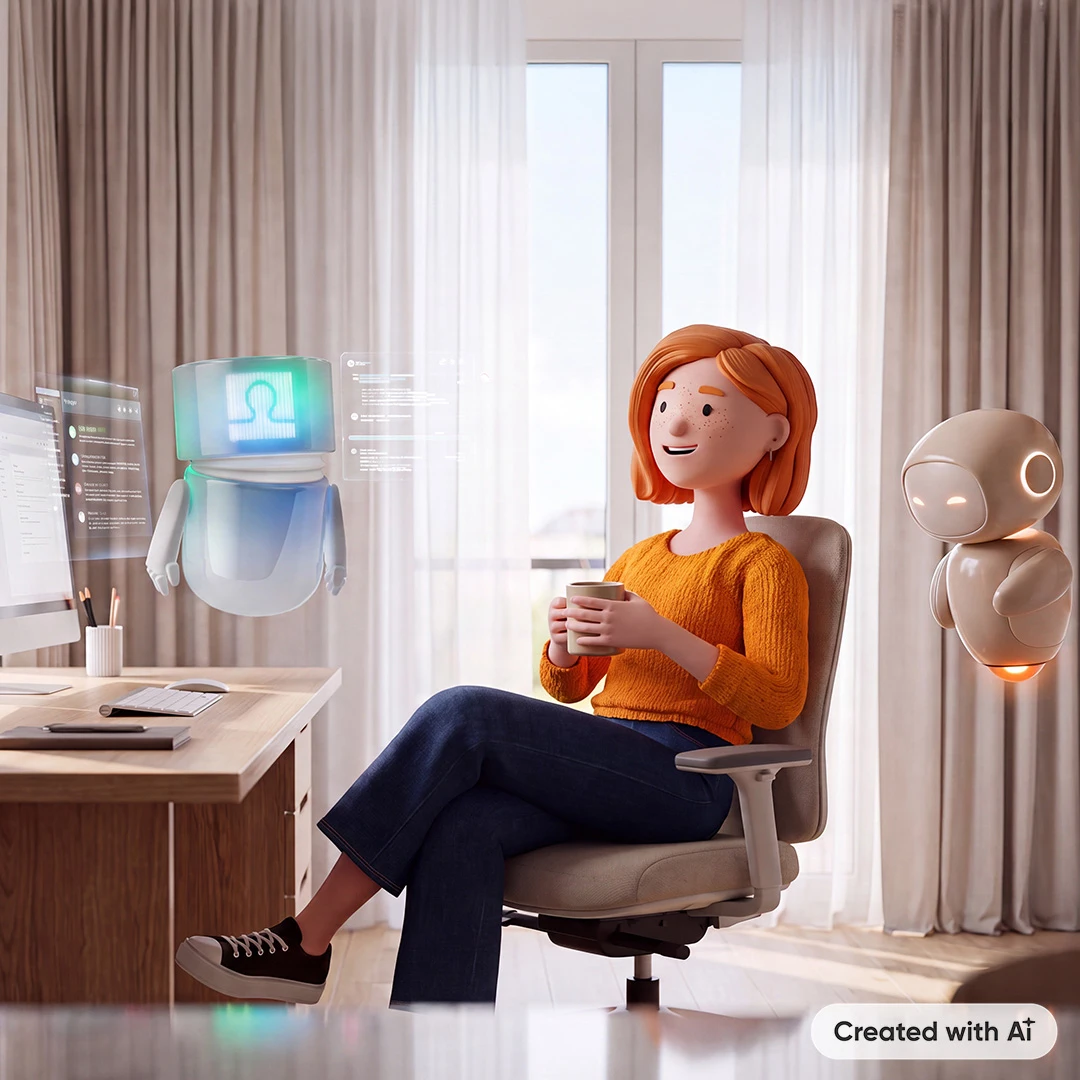
For decades, customer relationship management has been the answer to a simple question: How do companies maintain the relationship to their customers? CRM systems organized data, automated processes and connected marketing, sales and services. This worked well as long as humans were the primary conversational partners.
Today, this basic assumption is fundamentally changing. Personal AI assistants are increasingly taking on tasks that were previously handled by the customers themselves: They research offers, compare conditions, report claims, configure products and initiate transactions. As a result, customer interactions are taking place increasingly between AI assistant and customer agent on the company’s side.
This is exactly where agent relationship management (ARM) comes in. ARM is the concept that BSI Software defines as the next evolutionary stage of CRM: In the future, companies will manage relationships with customers and their AI assistants. Those who master this will secure visibility, relevance and trusts in the emerging agent economy. More about the concept: Agent Relationship Management in der BSI Customer Suite.
What is agent relationship management (ARM)? Definition
Agent relationship management is a strategic concept that enables companies to actively shape relationships not only with customers, but also with their personal AI assistants by opening and orchestrating CRM processes, data structures and communication channel for agent-to-agent interactions.
ARM answers the questions that traditional CRM leaves unanswered: Who is the AI assistant acting on behalf of the customer? What is its mandate? What is it permitted to request, initiate or pay for? How is communication handled and logged and when must a human take over? These questions – identity, mandate, policies, audit trail, human-in-the-loop – form the operative core of ARM.
Anyone how has strategically defined goals in customer relationship management will recognize that ARM expands CRM to include a new target group and a new level of interaction.
Why ARM is more than CRM
| CRM | ARM | |
|---|---|---|
| Relationship | Human ↔ company | Human and their AI assistant ↔ company |
| Zugangskanal | Website, app, call center | AI assistant |
| Journey | Customer journey | Agent journey |
| Prozesslogik | CRM processes | Agent orchestration |
While CRM optimizes customer journeys, ARM expands them to include agent journeys. This means that CRM remains the foundation and ARM builds upon it.
Why AI assistants are becoming the new access channel
Forrester describes a fundamental shift in marketing: AI agents and AI assistants retrieve structured information, validate it and pass it on to users. They hardly react to marketing messages at all, but instead seek out reliable, machine-readable data (source: forrester.com). AI assistants are thus evolving into the central interface between humans and digital services. They are available around the clock and know their users’ preferences, purchase histories and personal goals. And they take action.
From customer to personal AI assistant
In order to understand what agent relationship management means in practice, it helps to consider a character who accompanies BSI Software through all industry scenarios: Lena, a typical end customer in the DACH region. Lena uses a personal AI assistant – called Clara in BSI scenarios – to make everyday decisions. Clara researches, compares, communicates and takes action on Lena’s behalf.
Lena is considering a solar power system. Clara inquires with the energy provider, connects to the solar agent via the BSI Agent, analyzes the roof area, orientation and solar radiation, calculates the cost-effectiveness and suggests a suitable configuration. Lena receives an assessment – no forms, no waiting on hold, no app.
Why websites and apps alone will no longer be enough in the future
Customer journeys are designed for humans. Websites, apps and call centers can only make limited use of AI assistants. The result: Clara’s ability to perform services automatically is limited. She recommends customer agents from providers who offer her a structured channel. Companies that make their capabilities available through AI assistants gain visibility precisely where purchasing decisions are made and the customer experience is shaped.
| Today | Tomorrow |
|---|---|
| Customer visits website | AI agent requests service |
| Customer calls | Agent communicates with agent |
| Customer journey | Agent journey |
| CRM | ARM |
How agent relationship management works
Agent-to-agent communication
ARM operates through structured interfaces between a customer’s personal AI assistant and specialized AI agents on the company’s side. The BSI Agent handles the AI orchestration: It coordinates communication between the AI assistant and the specialized customer agents, such as a claims agent in insurance, a credit agent in banking or a commerce agent in retail.
This communication follows defined policies, mandates and protocols. Each interaction is documented in a traceable manner. This is a prerequisite for compliance in regulated industries such as banking, insurance and energy & utilities.
Identity, policies and human-in-the-Loop
ARM poses six key questions that companies must answer:
- Identity: Who is the AI assistant acting on behalf of a customer?
- Mandate: On whose behalf is it acting, and to what extent?
- Policies: What is it permitted to request, initiate or pay for?
- Channels & rate limits: How and how often does communication take place?
- Audit trail: What is logged, and is it reproducible?
- Human-in-the-loop: When must a human take over?
AI agents and AI assistants require a solid data foundation to do this. The article of the same name on the BSI Blog explains why data sovereignty in CRM is becoming a competitive advantage and why it is the foundation of any ARM strategy.
What ARM means for marketing, sales and service
| Area | Neue Aufgabe |
|---|---|
| Marketing | Create AI-readable offers |
| Sales | Enable agent-to-agent sales |
| Service | Provides autonomous service processes |
| Compliance | Define AI identity and policies |
| All areas | Embed human-in-the-loop |
CRM has aligned marketing, sales and service with human interactions. ARM reimagines these same functions on a new foundation: AI assistants as a distinct target group that requires its own channels, policies and communication logic.
Marketing for AI agents
AI agents read differently than humans. They look for structured, machine-readable information, such as prices, terms, availability and product features. Companies that present their offers in an AI-friendly way are prioritized by AI assistants. This fundamentally changes the customer experience: It is no longer the person alone who decides which offer to accept, but rather their personal AI assistant.
Sales between AI agents
Lena wants to increase her credit card limit. Clara takes care of it. She connects with the credit card agent at Lena’s bank, who automatically analyzes the card limit, usage patterns and risk profile and either adjusts the limit directly or suggests a temporary increase. No phone call, no login, no waiting. Sales between personal AI assistants and corporate agents is the direction in which sales processes in regulated industries are moving. Use case: AI agent for investment advice.
Service without waiting on hold
Lena had an accident on her e-bike. She asks Clara for help. Her insurance company’s claims agent records the claim, analyzes photos and location data, reviews coverage and claims history and decides on the next steps. The service agent proactively keeps Lena informed about repairs and payouts. Autonomous service processes are at the core of ARM in the insurance context and, at the same time, free up employees to focus on more complex advisory tasks. Use Case: Claims reporting via AI agent.
Agent relationship management in practice
Banking
Lena asks Clara if she can compile all of her tax documents from her various banks. The document agent accesses accounts, brokerage accounts and tax archives, checks for completeness and provides a structured tax dossier. Banks that make their services available through AI agents become AI-enabled financial partners – for Lena and for Clara.
Insurance
The next insurance dialogue will take place between AI assistants and customer agents. Claims reporting, coverage verification and settlement decisions – all orchestrated by the BSI Agent, executed by the claims agent and supported by the service agent. Insurers who are implementing this today will be visible when Lena asks her AI assistant, Clara.
Retail
Lena buys her new fall jacket without ever opening an online shop. The commerce agent knows her purchase history, favorite brands, size and loyalty points. It suggests a suitable jacket, including a personalized loyalty discount. The order agent processes the order. Agentic commerce is the next generation of e-commerce, starting with the customer’s AI assistant. Use case: Shopping via AI agent.
Energy & utilities
Lena is considering whether a solar power system is worth the investment. Clara uses the solar agent to analyze the roof area, orientation and sunlight exposure, calculates the system’s cost-effectiveness and recommends a configuration. Energy providers who adopt this approach proactively support their customers through the energy transition. Use case: Energy consultations via AI agent.
How the BSI Customer Suite prepares companies for the agent economy
The BSI Customer Suite is the only holistic European CRM platform with agentic AI by design that implements ARM as an integrated concept. The BSI Element “ARM: agent relationship management” can be integrated directly into existing work environments. Through the BSI Agent, AI assistants connect customers with specialized customer agents – securely, transparently and in compliance with regulations.
What the BSI Customer Suite specifically offers:
- Model agnosticism: more than 70 AI models to choose from, interchangeable within 90 minutes. No vendor lock-in.
- Open architecture: transparent open-source foundation with open APIs. No proprietary dependencies.
- Human-in-the-loop by design: companies decide what AI assistants are allowed to do, what they should do and where humans retain control.
- Responsible AI: BSI Software developed its own code of conduct for AI in 2023, holds the Data Fairness Label and implements AI by design as a binding development principle.
AI orchestration via the BSI Customer Suite enables companies to deploy specialized customer agents for every channel and every industry. Learn more about our European positioning: CRM/CX Made in Europe.
Conclusion: CRM is evolving into ARM
CRM has digitized customer relationships. ARM expands on this approach by incorporating the relationship with customers’ AI assistants. Key insights:
- AI assistants are becoming the primary access channel in banking, insurance, retail and energy & utilities.
- Companies that open their services to AI agents gain visibility in purchasing decisions and are reshaping the customer experience.
- ARM addresses the questions left unanswered by CRM: identity, mandate, policies, audit trail and human-in-the-loop.
- Agentic commerce, autonomous service processes and agent-to-agent sales are already feasible today.
- Data sovereignty and responsible AI are the prerequisites for trustworthy ARM in regulated industries.
Those who invest in ARM today secure access to customers and their AI assistants.
What does agent relationship management look like in practice? Discover how the BSI Customer Suite helps companies in the banking, insurance, retail and energy & utilities sectors target AI assistants as a new audience: agent relationship management – BSI Customer Suite.
Or read about how the concept came about and what it means: agent relationship management on the BSI Software Blog.

Talk with us
We would be happy to assist you at any time.