The Next Generation of CRM

CRM doesn't just manage customer data. It creates customer value.

CRM is evolving from a system for managing customer data into a strategic platform for growth, customer experience and efficiency. Discover the developments shaping the CRM market and what they mean for your business.
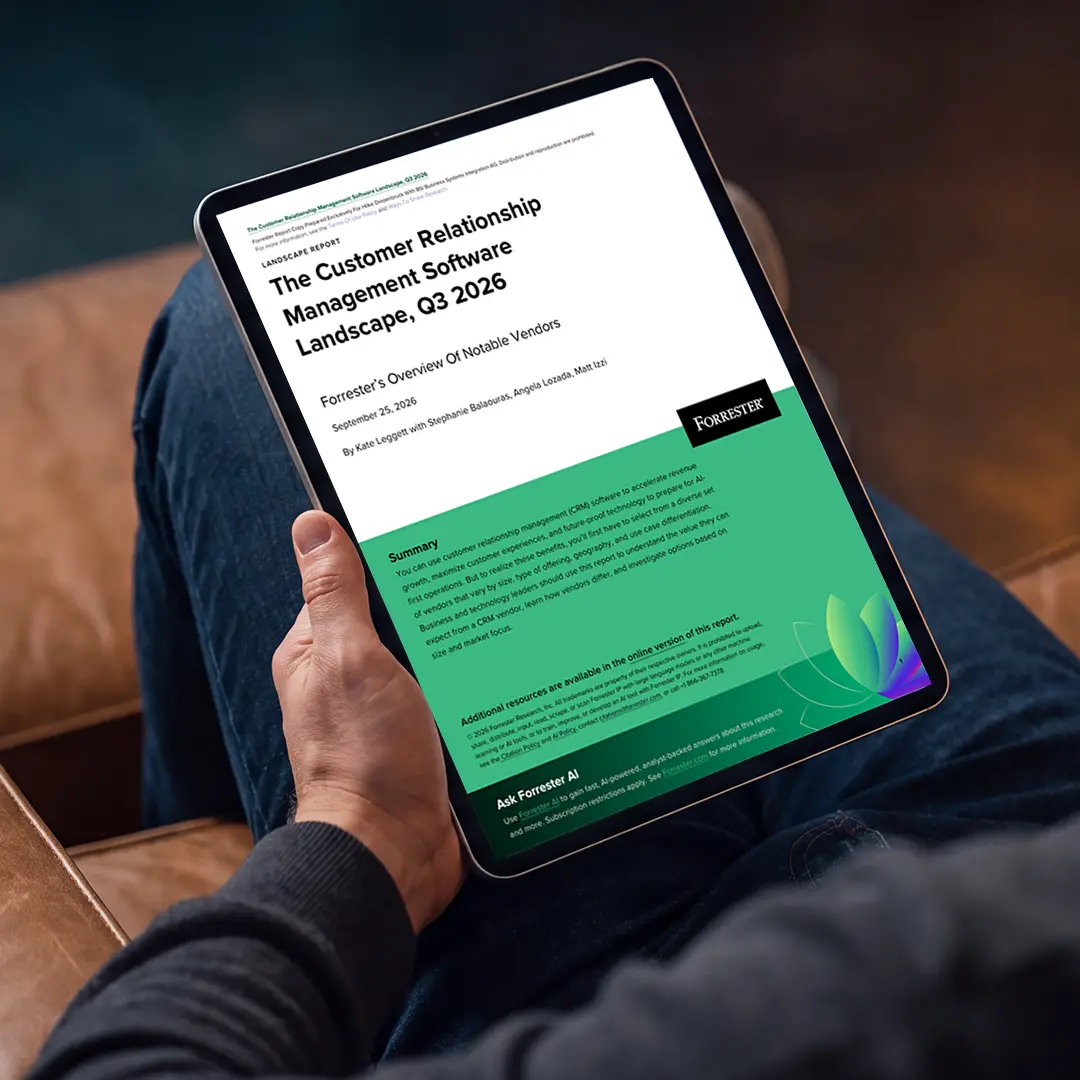
A man sits on a brown leather sofa, reading the Forrester report "The Customer Relationship Management Software Landscape, Q3 2026" on a tablet. The report provides an overview of notable CRM software vendors and examines the current market landscape for customer relationship management solutions.

Rethinking CRM

CRM connects marketing, sales and customer service, creating a unified view of your customers. But expectations have evolved. Today, CRM is expected to drive growth, improve customer experiences and make processes more efficient.


The key question is no longer just what your CRM can do, but what tangible value it creates for your customers and your business.

Four Trends Shaping the Next Generation of CRM

From Data Storage to Intelligence

Customer data is no longer simply collected. It is used to uncover connections, better understand customer needs and make more informed decisions.

From Generic to Industry-Specific

Customer needs, processes and regulatory requirements vary across industries. That's why industry-specific CRM capabilities are becoming increasingly important.

From AI Hype to Business Value

What matters is not how many AI features a CRM offers, but the measurable contribution AI makes to growth, efficiency and customer experience.

From Assistance to Action

AI agents are increasingly capable of executing processes autonomously. This is changing the role of people and creating new requirements for control, oversight and AI governance.

The CRM Market at a Glance

What's changing in the CRM market? What role does AI play? Which use cases are gaining importance, and where is CRM heading?

The Forrester report "The Customer Relationship Management Software Landscape, Q3 2026" provides an overview of the CRM market, key use cases and major trends surrounding AI, industry specialization and the future of CRM.

Access the Forrester Report
Logo Forrester

Frequently Asked Questions About the Future of CRM

What is a modern CRM system?

A modern CRM system goes beyond simply managing customer data. It connects data, processes and customer interactions across marketing, sales and customer service. The goal is to create a 360-degree view of customers, enable better decision-making and build stronger, more targeted customer relationships.

How is artificial intelligence transforming CRM?

AI in CRM can help analyze large volumes of customer data, identify patterns and recommend next steps. But the technology is evolving further: AI agents can increasingly execute certain tasks and processes autonomously. As a result, CRM is evolving from a system that stores data into one that understands, recommends and acts.

What business value can CRM deliver?

CRM can support a range of business objectives, including revenue growth, stronger customer retention, better customer experiences and more efficient processes. What matters is not simply which features a CRM solution offers, but the measurable contribution it makes to achieving business goals.

Why is industry-specific CRM becoming more important?

Processes, data models and regulatory requirements vary by industry. Industry-specific CRM solutions are designed to address these requirements from the outset. This can reduce the need for customization and make CRM systems easier to implement and use.

What role do AI agents play in CRM?

AI agents can analyze information, support decision-making and increasingly execute tasks or workflows autonomously. This is changing how people and technology work together. At the same time, control, oversight and AI governance are becoming more important, particularly in regulated industries.

What is autonomous CRM?

Autonomous CRM refers to the evolution towards CRM systems that go beyond providing information or recommendations to increasingly execute certain customer-related processes independently. People, in turn, focus more on strategy, relationship management, oversight and exception handling.

Which CRM trends are shaping the future?

Key developments include the growing use of AI in CRM, greater industry specialization and an increasing focus on measurable business value. At the same time, CRM systems are evolving beyond data management into intelligent platforms capable of taking increasingly autonomous action.

What should companies consider when evolving their CRM?

The starting point should not be which new features are available. Instead, companies should first define the business and customer objectives they want to achieve. Based on these goals, they can identify requirements for data, processes, integration, AI and governance, and evaluate suitable CRM solutions.

Forrester does not endorse any company, product, brand, or service included in its research publications and does not advise any person to select the products or services of any company or brand based on the ratings included in such publications. Information is based on the best available resources. Opinions reflect judgment at the time and are subject to change. This report is part of a broader collection of Forrester resources, including interactive models, frameworks, tools, data, and access to analyst guidance. For more information, read about Forrester’s objectivity here .