Marketing teams want to engage customers more effectively, sales teams aim to identify relevant opportunities earlier, and customer service teams need the right context to resolve issues quickly and personally.
All three depend on the same foundation: a shared understanding of the customer.
This is where the role of CRM software is evolving. It connects data, processes and customer interactions across marketing, sales and service. As a result, CRM is increasingly moving beyond an operational tool to become a strategic platform for customer relationships.
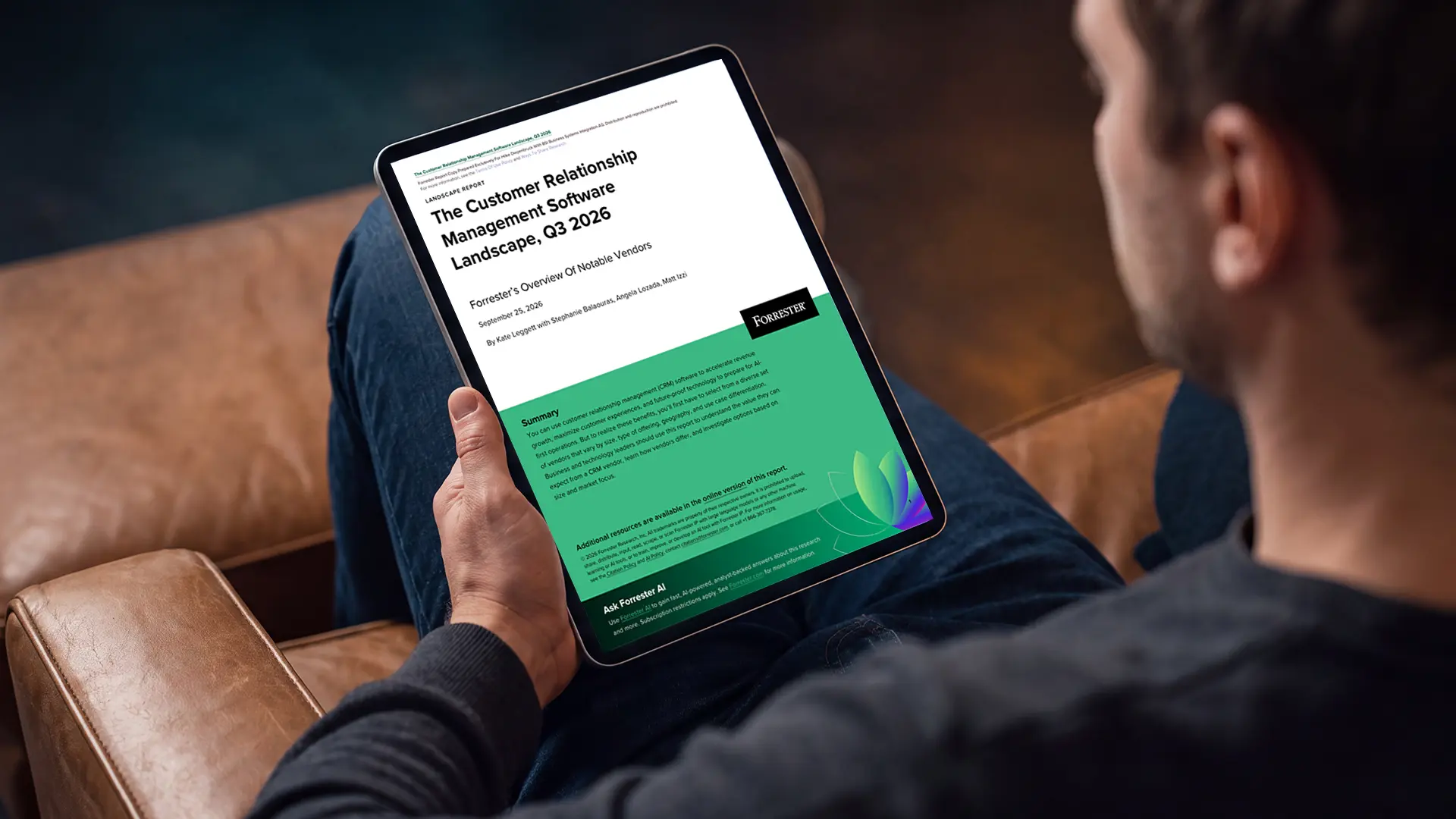
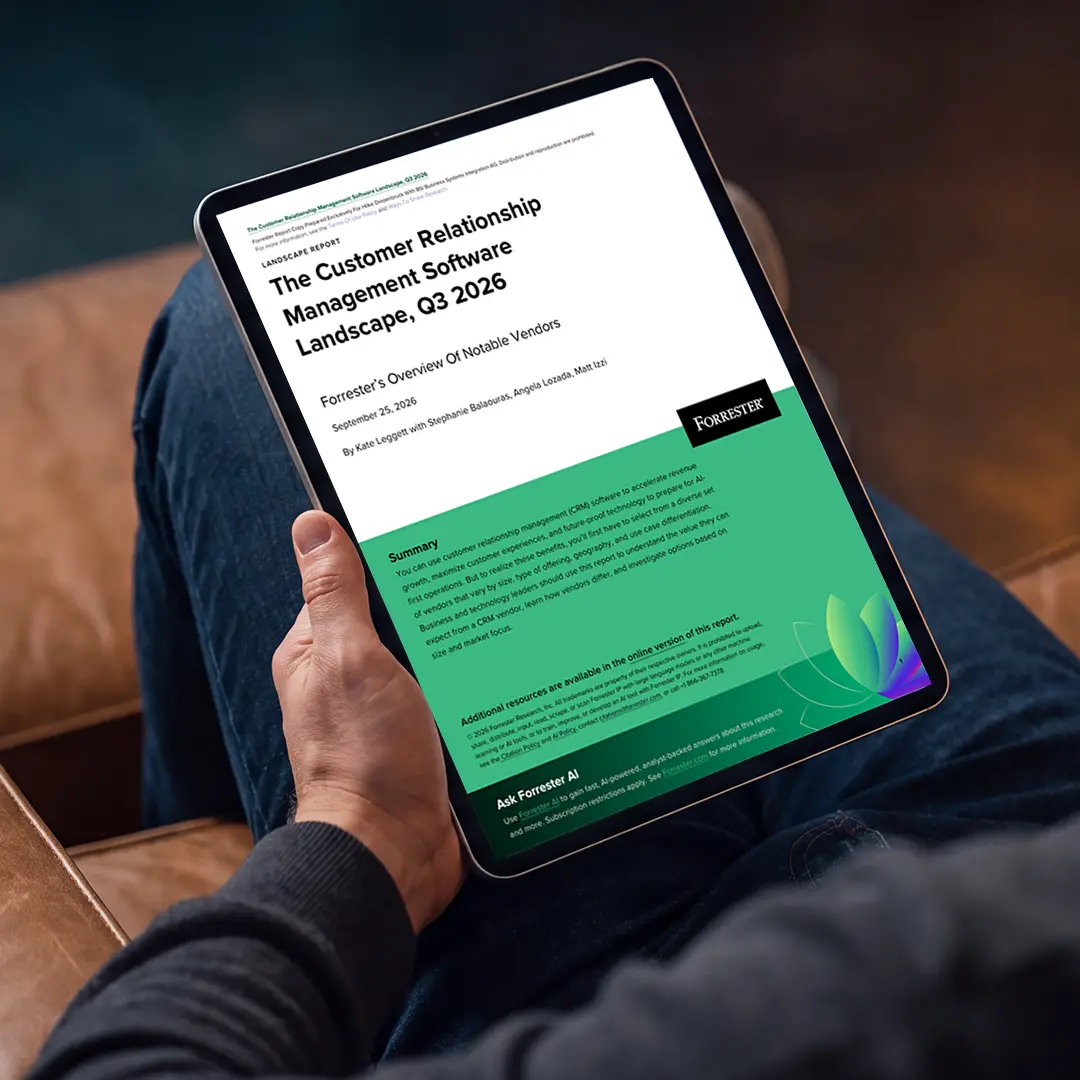
Forrester links CRM adoption to three key business outcomes in particular: revenue growth, improved customer experience and greater efficiency.
What does this mean in practice?
CRM can help companies identify sales opportunities more effectively, unlock cross-selling and upselling potential, and reduce customer churn. At the same time, CRM software automates recurring processes and frees employees from repetitive tasks.
In customer service, teams have access to relevant customer information and interaction histories, while marketing and sales can engage customers in a more targeted and personalized way.
The value of modern CRM software does not come from collecting customer data, but from using it intelligently. This is how data translates into stronger customer relationships and measurable business outcomes.
The importance of customer experience is also reflected in business priorities. According to data cited in the Forrester report, 79% of business and technology professionals in the private sector consider improving customer experience a high priority.
Better customer experiences and greater efficiency reinforce each other. Customers benefit from more relevant and consistent interactions, while employees are supported by a complete view of the customer and automated processes.
Artificial intelligence is a key driver of this transformation. Forrester identifies AI as the biggest disruptor in the CRM market.
AI in CRM can analyze interactions, identify patterns and recommend next steps. Increasingly, it can also execute tasks and workflows autonomously.
CRM is therefore evolving step by step: Data Storage → Intelligence → Action → Autonomy
What was once a system for documenting information is increasingly becoming a system that interprets information, supports actions and, in the future, will be able to execute certain customer-related processes autonomously.
This development is set to play a defining role in the future of CRM.
As AI creates new opportunities, modern CRM platforms continue to expand their capabilities. However, Forrester highlights a key challenge: some companies struggle to connect their investments in CRM and AI to measurable business value.
Fragmented data, disconnected applications, inconsistent processes and a lack of governance can prevent companies from realizing the full potential of AI.
This makes it essential for companies to define which business outcomes they want to improve with their CRM.
Higher revenue? Stronger customer retention? Greater customer satisfaction? More productive employees? Lower service costs?
Starting with these objectives makes it easier to determine which data, processes, technologies and AI applications are actually needed.
Developments in the CRM market demonstrate just how much the role of CRM is changing. Data remains the foundation. But the focus is increasingly shifting towards turning that data into insights, supporting decisions, automating processes and creating measurable value for customers and businesses.
For BSI Software, rethinking CRM therefore means starting not with features and technology, but with the value CRM should create for customers and businesses.
Where Is the CRM Market Heading?